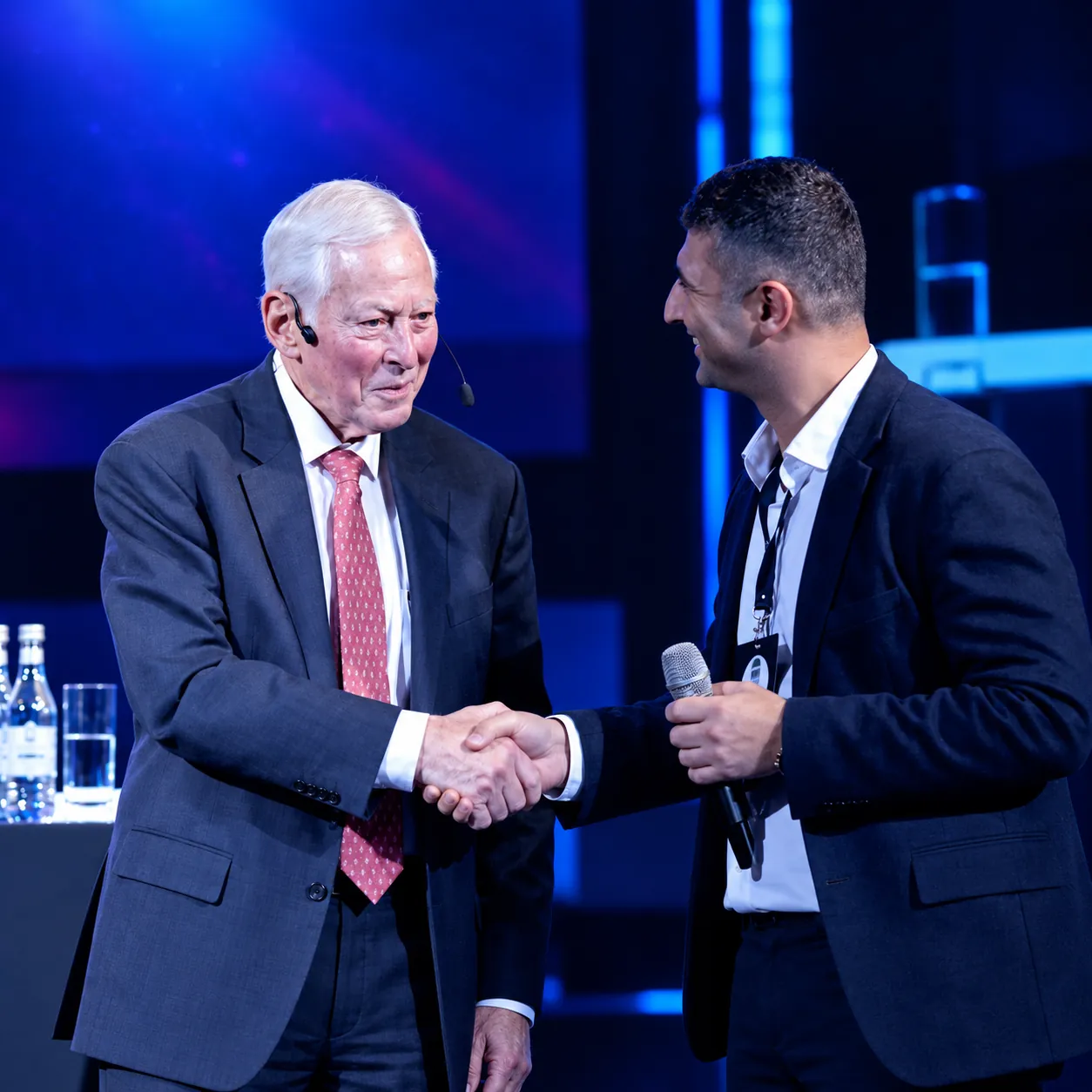
I think that is one of the highest forms of professional recognition. It is more than being famous within your own audience, and more than having popular books or seminars. It is the respect of people who have achieved a great deal themselves, work in entirely different disciplines and are capable of recognizing the scale of someone else’s work.
Brian Tracy wrote more than seventy books translated into dozens of languages, spoke to millions of people and worked in more than one hundred countries across six continents. Behind those numbers were extraordinary discipline, remarkable intellectual productivity and decades of continuous work. But perhaps his greatest talent lay elsewhere. He could explain difficult ideas so simply that they became accessible to almost anyone, and behind that simplicity was a deep understanding of the subject, an ability to isolate what mattered and a rare talent for turning knowledge into action.
He continued writing, speaking, travelling and sharing what he knew at an age when many people have long since ended their professional careers. If the scale of a person is measured not only by how many people listened to them, but also by how many began to act differently because of them, then Brian Tracy’s legacy extends far beyond his books and appearances.
Brian Tracy died on November 12, 2026. He was 82.
For millions of people, this is the loss of an author, teacher and person whose ideas helped them make decisions, set goals and change their lives. For me, it is also the loss of someone connected to one of the most important chapters of my professional biography.
When I first read his books in the early 2010s, then listened to his talks and later attended one of his events in person, I could not have imagined that one day I would be sitting beside him in a Moscow hotel, a camera would switch on, and Brian would announce that he was coming to Armenia. I certainly could not have known that this visit would become the first page in the story of a company that, at that point, barely existed.
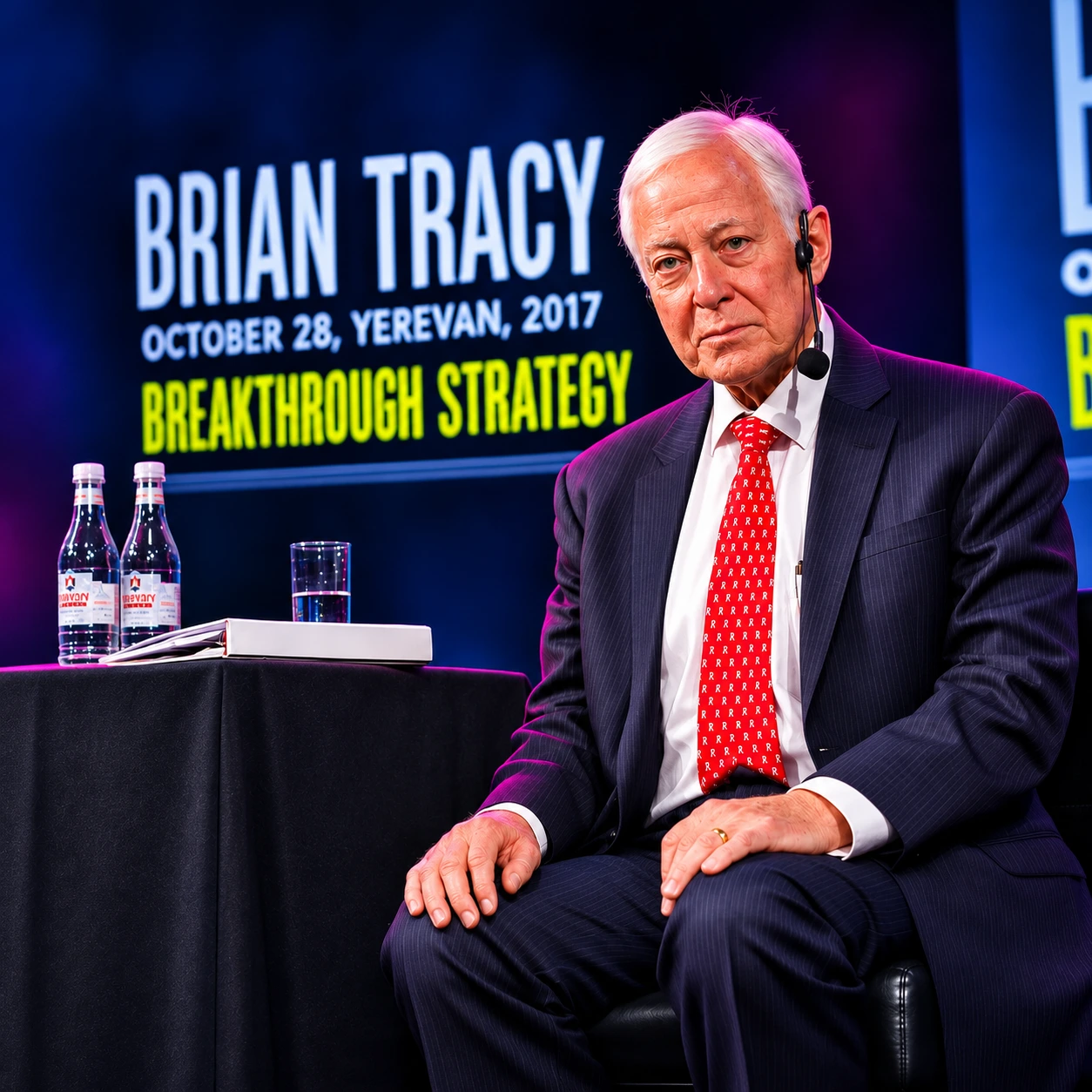
On October 28, 2017, Brian Tracy stepped onto the stage in Yerevan with his Breakthrough Strategy program. Today, with hundreds of events, international speakers, festivals, forums and awards behind Skill, it is easy to look back and see that project as the first item in a large portfolio. In reality, the opposite was true: there was no large portfolio yet. There was one event, and we had to deliver it as if years of experience already stood behind us.
That is why Brian Tracy will always remain the first for me.
The true measure of a person shows not only in how many people listen to them, but in how they are remembered by those who worked alongside them.
From the books to the person sitting beside me
My story with Brian began long before Skill. I read his books, followed his work and attended his talks. By the middle of the 2010s, his name already occupied a familiar distance in my mind: the author on a book cover, the person on a stage, the voice behind books and recordings.
That distance disappeared unexpectedly in Moscow. We met at a hotel and talked about a possible visit to Armenia. At some point Brian simply suggested that I sit beside him so we could record a short video. On camera, he announced that he would come to Yerevan.
Today, that video carries a very different weight for me. At the time it was one element of a future marketing campaign. Now I see it as a document from the beginning of a story whose consequences no one in that room could yet calculate.
There is something like this in many large projects. We tend to define the starting point as the moment a contract is signed, the first meeting takes place or the public announcement goes live. Yet the real beginning often becomes visible only in retrospect. Sometimes it is a short conversation, an unexpected turn, or a simple phrase: “Sit next to me, let’s record this.”
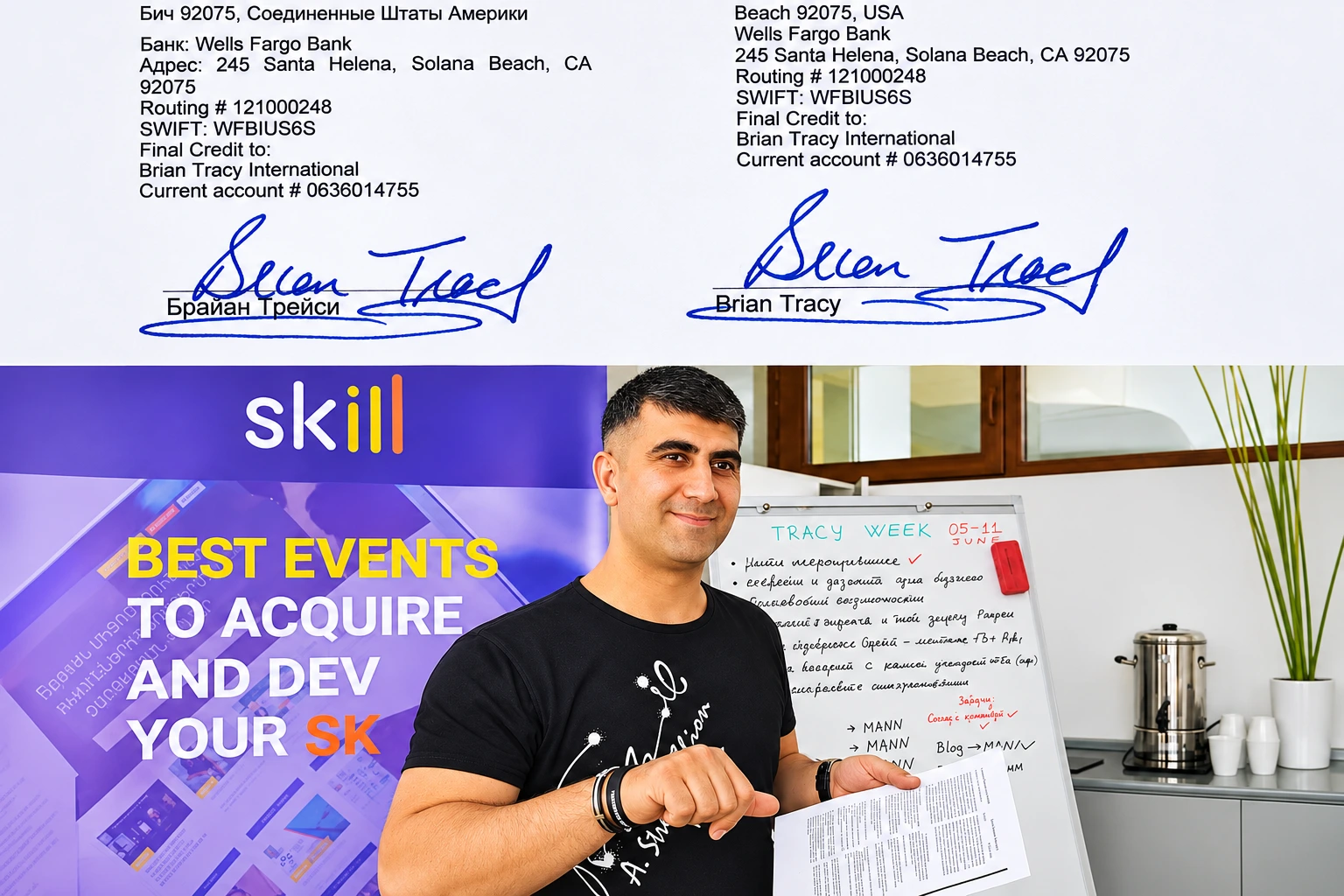
The story of Skill began long before the first event. It began with a decision to turn a professional dream into a business of our own.
One day that took months to build
Formally, we were preparing a four-and-a-half-hour seminar at the Gabriel Sundukyan National Academic Theatre. The program was delivered in English with simultaneous interpretation into Armenian and Russian. Around it we built a partner exhibition, several participation packages and a separate program for Platinum guests. In the old sponsorship proposal, all of this looks almost calm: date, venue, program, partners and brand opportunities.
The reality was much more complicated.
For us, this was a new product, a new company, a new format and a market that still had to be convinced that an event like this was worth several hours of attention and a meaningful ticket price. Brian Tracy was a global name, but global recognition does not automatically translate into mass local awareness. We could not simply put his face on a poster, open ticket sales and expect the market to do the rest.
So we built the promotion of a single event according to a logic I compared at the time with a short political campaign. When a politician or party has been known for twenty years, much of the awareness already exists. A new political bloc has a much harder task: within a few months, it must move from near-zero recognition to a point where its name becomes part of the everyday information environment.
Our task was similar. By October 28, Brian Tracy had to become more than a name on a ticket in Armenia. His arrival had to become something that was difficult not to notice.
360 degrees around a single event
Today, the phrase “360° marketing” can sound almost generic. In 2017, we genuinely tried to use every channel we could reach around one event, and the point was not to run those channels independently. Each one had to reinforce the others.
The Skill archive shows the scale of that work. In Facebook alone, 142 posts mentioning Brian Tracy from 2017 have been preserved; Instagram adds another 25. That does not mean we repeated the same sales message every day. Quite the opposite: much of the campaign was built around Brian’s intellectual territory — goals, sales, personal development, leadership, habits, education and personal effectiveness.
At the same time there were television reports, radio appearances, interviews, partner publications, contests, ticket giveaways, volunteer communications and separate offline activations. We collected questions for Brian from the audience, published content about interpretation, the venue, partners and the program, and treated every new element of the project as a potential story in its own right.

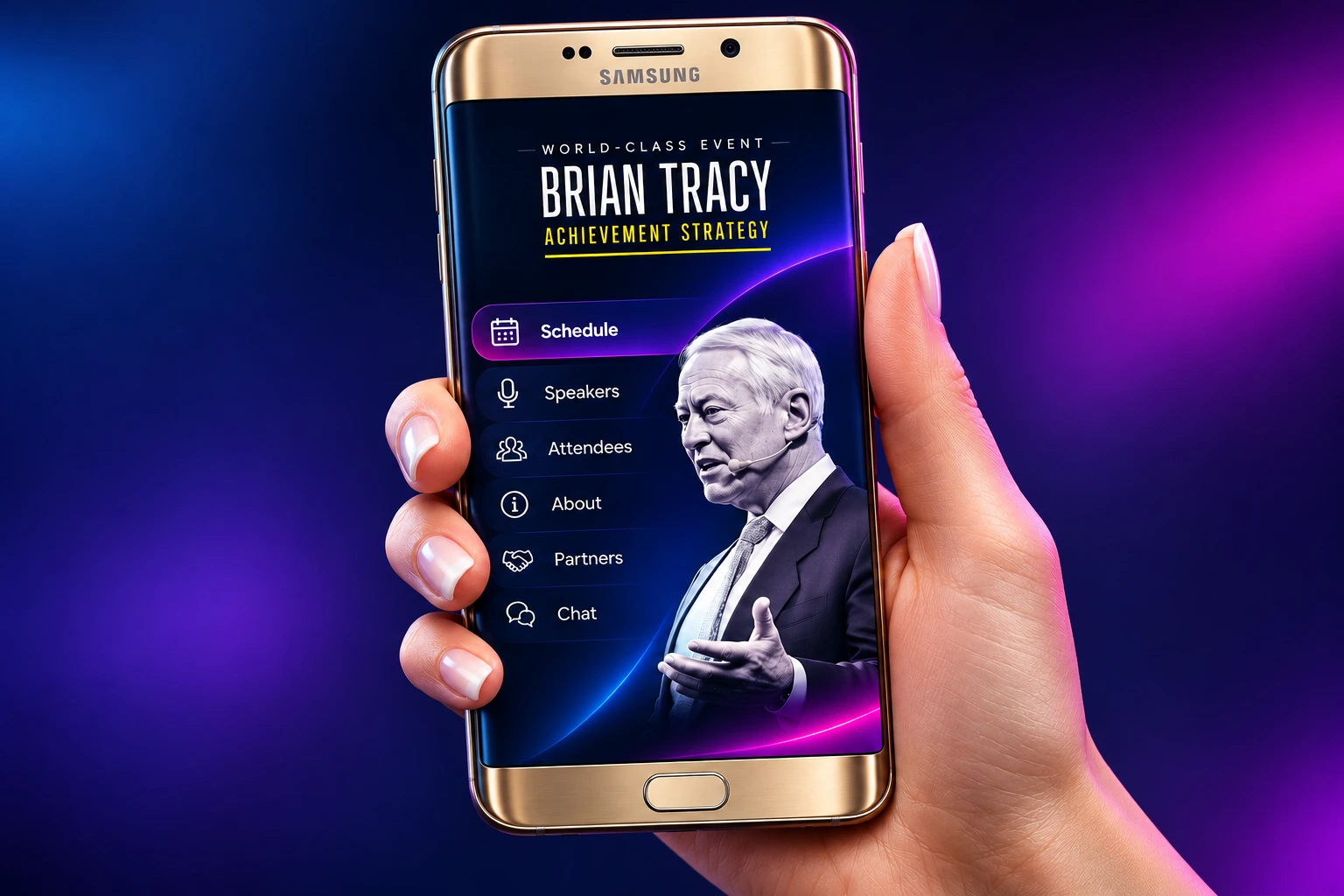
The event had its own website. We launched an official mobile app and provided participants with personal access credentials in advance. Simultaneous interpretation into Armenian and Russian was available to guests. The morning after the main seminar, Brian met Platinum participants for breakfast.
Partners became part of the communication system, with each brand acting as an additional media channel. DoubleTree by Hilton Yerevan City Centre hosted Brian and his team. Armenia Wine, ALEX Textile, Segafredo Zanetti Espresso Yerevan, Radio Aurora and other brands did not appear merely as logos on a sponsor board; each partnership created its own story and another reason to engage the audience.
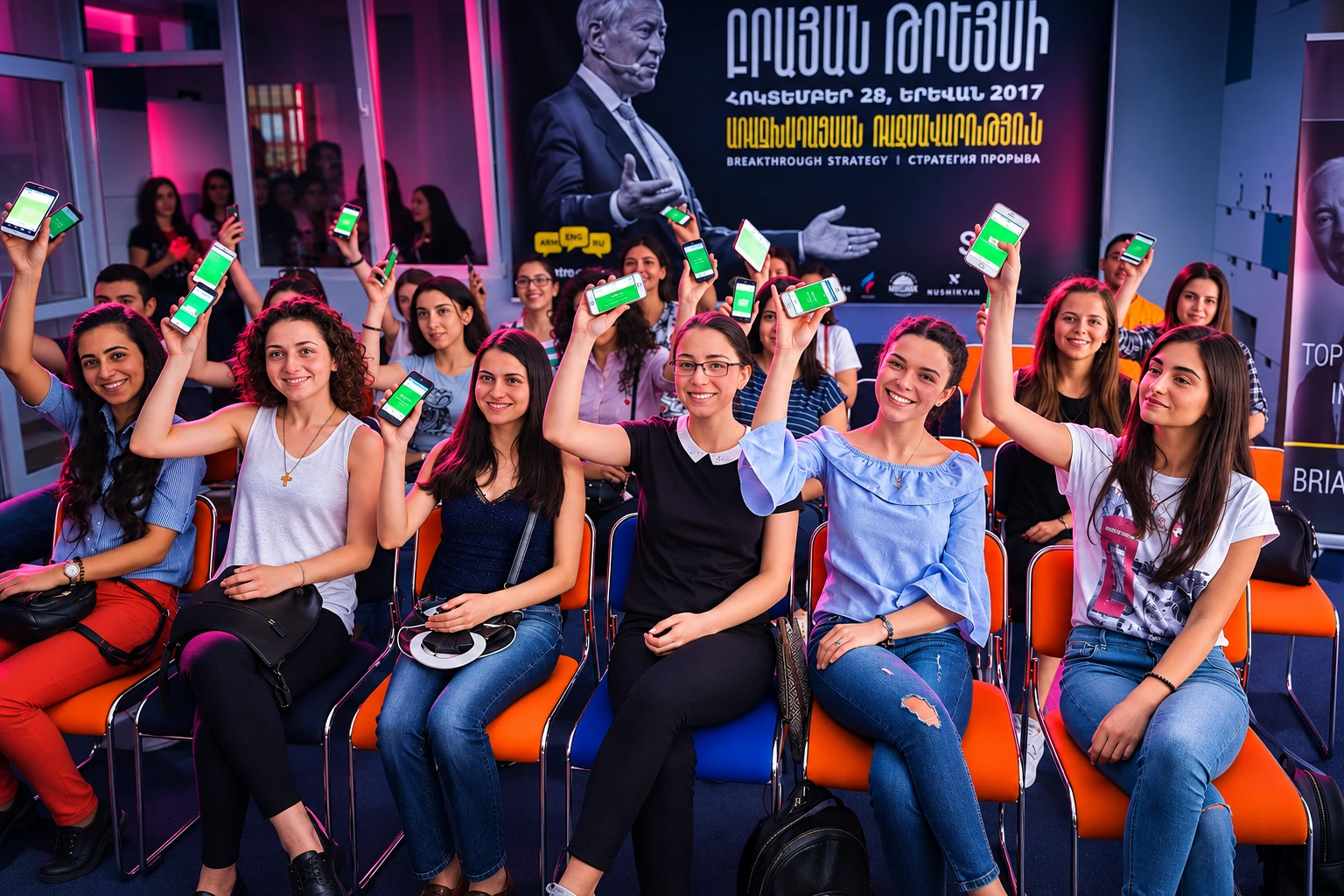
Even the preparation of coffee and desserts for the event could become a separate tasting and live broadcast. Today I would describe this as the design of a distributed communication system around an event. At the time, we did not need an elegant term for it. We simply understood that no single advertising channel could create the density of presence we needed.
The waiter who explained it better than analytics
Campaign effectiveness is easy to describe through reach, publication counts, sales or frequency of mentions. But sometimes the real effect becomes visible through a small episode that could never have appeared in a media plan.
Sergey Ozerov was due to open the program on October 28. We had already worked with Sergey before, and on the morning of the event he was having breakfast at the hotel restaurant while preparing for his talk. A waiter asked what had brought him to Armenia.
Sergey said he was speaking at a large event that day. The waiter almost immediately asked, “At Brian Tracy?” Sergey was surprised and asked how he knew about it. The answer was simple: it seemed that everyone in Armenia knew Brian Tracy was here.
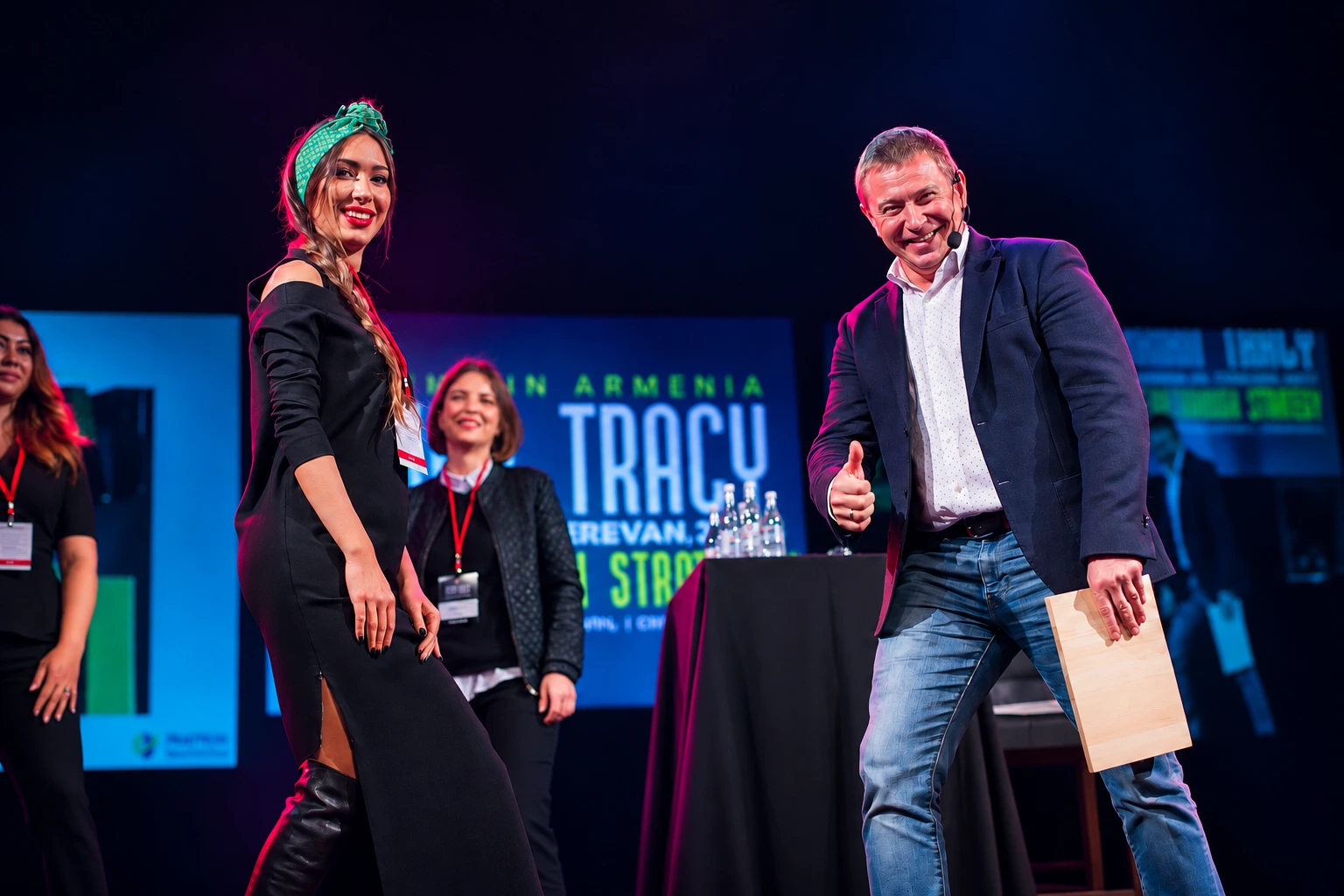
When Sergey later told us the story, it fit perfectly with a joke that had already been circulating inside the team: if Armenia had held presidential elections on October 27, 2017, Brian Tracy would have had a reasonable chance of winning. We laughed, of course, but the joke reflected a very real professional outcome. The campaign had moved beyond the audience of ticket buyers and begun to create mass awareness of the event.
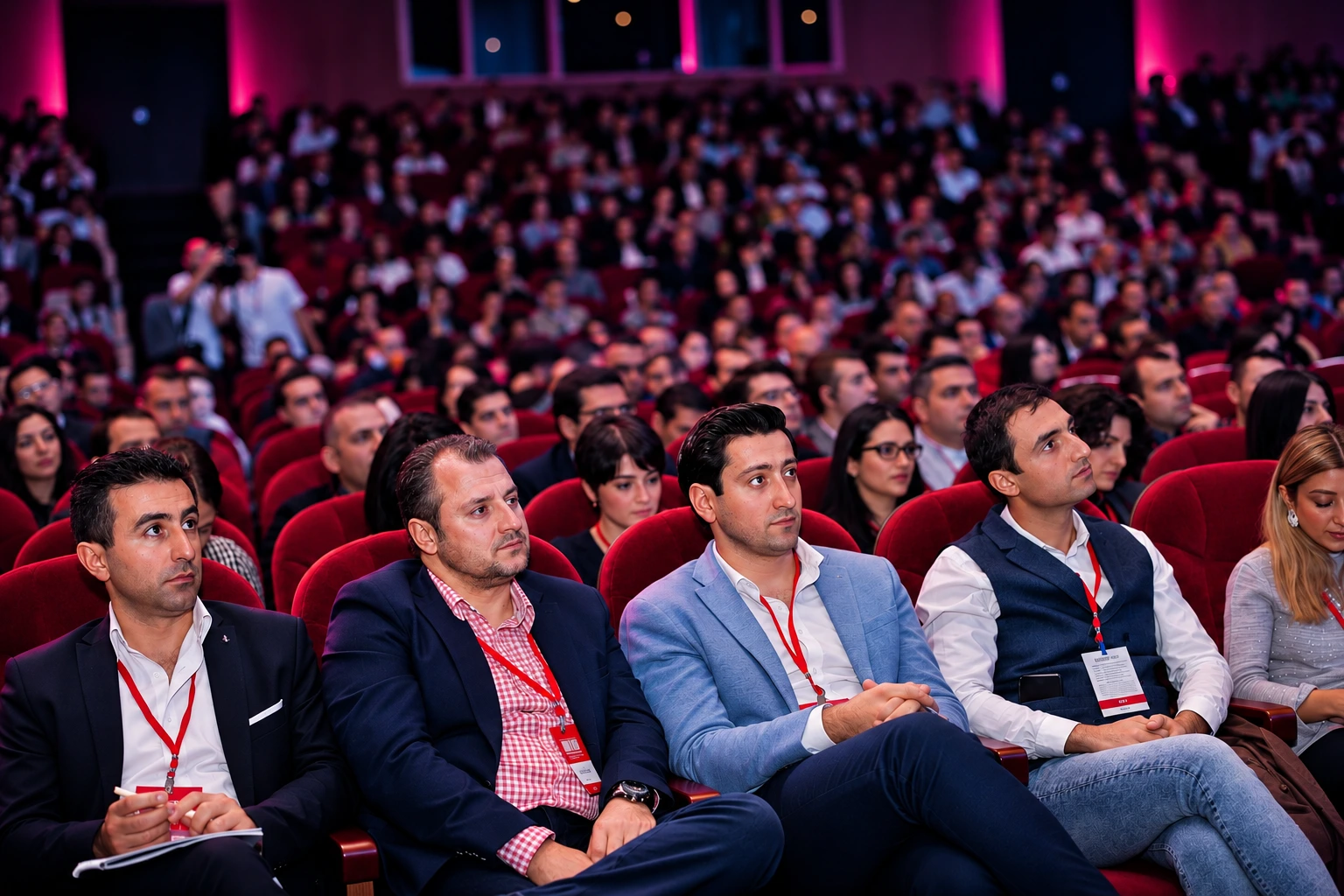
For me, that episode became one of the first clear demonstrations of a simple idea: a strong event begins long before the first guest reaches registration. The event day is only the most visible point in a much longer process in which attention, anticipation and social proof are built gradually.
Why a “famous speaker” guarantees nothing
Big names often create an illusion of easy marketing. It can seem as if inviting a famous person, putting their photograph on a billboard and opening ticket sales should be enough. Years of working with international speakers have convinced me that this is one of the most dangerous illusions in the event business.
Fame is not a universal currency. A person can be extremely well known within a professional community and almost invisible beyond it. More importantly, even high awareness does not explain to an audience why they should spend their time, money and attention on a particular event right now.
That is why, around Brian Tracy, we were not simply selling celebrity. We consistently explained what problems his knowledge could help address, why sales, strategy, goals and performance mattered to the individual person, and why being there in person was different from reading another book or watching another video.
This was the first time event and marketing truly came together for me. Before that, it was easy to think of them as two consecutive functions: first we create the event, then we advertise it. Brian Tracy’s project showed a different structure. Communication itself became part of the product because, before the doors even opened, it was already shaping expectation, community, the status of the event and its future memory.
Fifty days before the event, I saw a different ending
None of that communication density eliminated operational risk. Fifty days before Brian Tracy arrived, I had a dream from which I woke with the completely real sensation that the project had failed and that my career as an event organizer had ended almost before it had begun.
I told that story in detail in a separate THINKING article, “50 Days Before Brian Tracy, I Saw My Career Come to an End.” What matters to me about it is not the drama of the dream itself, but the moment when my approach to managing the project changed.
We already had tasks, owners, deadlines and the usual operational discipline. After that dream, I saw very clearly that having a task in a system does not mean that the event is under control. The real risks lived between the tasks: one delay could alter another, a partner’s decision could affect logistics, logistics could affect communication, communication could affect sales, and any program change could trigger a chain of dependencies that no single task card could reveal.
The next fifty days became an accelerated course in systems management for complex projects. I did not yet call it project architecture, and I had not formulated many of the principles I use today. But that event was the first time I understood that a good event manager has to see not only the list of work, but the entire system of relationships between its parts.
The bigger the event, the more its outcome depends on decisions the audience will never see.
October 28, 2017
Over the years I have stood behind many large stages, and I no longer experience the opening of doors as something magical in itself. But some events remain vivid not because of the scale of the set or the size of the audience, but because you remember very clearly who you were when you entered the project and who you were when you left it.

October 28 was that kind of day for me.
Months of communication, sales, negotiations and work with partners, volunteers, technical teams and contractors finally compressed into a few hours. Brian Tracy stepped onto the stage in Yerevan, and for the first time I saw from the inside the result of a system that until then had existed only in plans, spreadsheets, messages and endless discussions.
An organizer rarely feels pure euphoria in moments like this. You are still watching the timing, the people, interpretation, the room, technical details and dozens of processes the audience should never have to notice. Yet somewhere alongside all of that, a quiet realization appears: something that had seemed almost reckless a few months earlier has become real.
Behind every major event are people whose names rarely appear on the poster, yet without whom that poster would have remained only a promise.
The following morning there was breakfast with Brian and the Platinum participants, the final conversations, photographs and goodbyes. Then Brian left Armenia. Formally, the event was over. Only after that did it become clear that for us, in a sense, it was just beginning.
The event after which a company appeared
In 2018, Kjell Nordström came to Armenia. Then came John Tschohl, Kevin Gaskell, Irina Khakamada, Alexey Sitnikov and other international speakers. World’s Top Speakers in Armenia gradually took shape, while Skill grew around it.
Every subsequent project was more complex in its own way. Some were larger, some involved more functions and partners, some introduced completely new audiences or technical challenges. But comparing them with Brian by asking which event was “bigger” makes little sense to me, because his significance lies on a different dimension.
With Brian Tracy, we saw for the first time that an event could operate as a complete communication ecosystem. Content, PR, digital, partner activations, offline communication, sales, community work, a mobile product, media and event production all came together in a single project. One day on the calendar made dozens of connected mechanisms work for months.
Later we did this more consciously, more precisely and more systematically. We developed models, processes, standards and a professional language for explaining what was happening. But the first practical experience had already been lived.
That is why later Skill publications began to use October 28, 2017 as the starting point of the company’s history. This is not a marketing legend invented years afterward. Professionally, it describes the reality fairly well: before Brian Tracy there were people, ideas and an intention to work with events; after Brian Tracy, there was confidence that a real business could be built from them.
What remains nine years later
It is interesting to see which details outlive the event itself. For years we continued to mention Brian in the story of World’s Top Speakers in Armenia. His books became part of Skillbook. Signed copies were used as gifts. When we once sold an old Skill car, one of the playful lines in the listing was that Brian Tracy, Kjell Nordström, John Tschohl and other guests had ridden in it.
At first glance, these are small things with no direct relationship to business outcomes. Yet organizational memory is built precisely from details like these. A company is not only a legal entity, processes and projects; it is also a collection of stories the team continues to tell years later because those stories explain where the company came from.
Brian Tracy gradually became part of that memory for Skill. Not because we were close friends or stayed in constant personal contact after his visit. It would be wrong to attribute a relationship that did not exist. His place in my story comes from something else: our professional trajectories crossed at a moment that changed my own.
For Brian, Yerevan was one of thousands of speaking engagements. According to Brian Tracy International, over the course of his career he addressed more than five million people in 5,000 talks and seminars across the United States, Canada and dozens of other countries, and wrote more than seventy books translated into many languages. For us, one city and one day carried an entirely different proportion.
The first remains the first
Brian Tracy died on November 12, 2026, at the age of 82. At the time this text was prepared, the circumstances of his death had not been publicly disclosed, so I will not repeat unverified accounts. What matters more to me is that the news unexpectedly took me back to another date — October 28, 2017 — and made me look again at the nine years between them.
During those years, Skill produced hundreds of events. Some were larger in audience, more complex in production, richer in technology or more visible through international awards. But professional history rarely follows a simple scale of size. A first project cannot be surpassed by the next one, because its importance does not come from its scale; it comes from the fact that before it, you had no past to rely on.
Brian Tracy was that kind of first for Skill.
At one point I read his books as a member of the audience. Then I listened to him from the hall. Later I sat beside him in a Moscow hotel while he told a camera that he was coming to Armenia. A few months later I watched him walk onto the stage of an event around which our small team had built what was probably the most intensive marketing campaign of our lives up to that point.
Today I understand that the most important legacy of that encounter for me is not even what Brian taught from the stage. What mattered just as much was what happened around his visit. One project forced us to think beyond our own experience, build a system around an event, manage risk, work with dozens of partners and, for the first time, feel that Skill could become a real company.
Perhaps that is why, after learning of his death, I feel less inclined to list Brian Tracy’s achievements than to preserve a much smaller story: the story of a man who once told me in a Moscow hotel, “Sit next to me,” announced that he was coming to Armenia and, without knowing it, found himself at the beginning of a professional journey that is still continuing.
Thank you, Brian.
However you look at it, you were the first.
Thank you, Brian. Whichever way you look at it, you were the first.
SOURCES
Brian Tracy International — About Brian: https://www.briantracy.com/about/
Skill social archives — Facebook / Instagram, 2017–2026
Brian Tracy tribute / reported date of death: https://www.martialartsprofessional.com/brian-tracy-1944-2026/